Procurement Challenge # 1 Rapid Evolution of Procurement Technology- Real Life Example
- Elsayed Elbaz
- Aug 1
- 3 min read
In my previous blog, I discussed numerous procurement and supply chain challenges. In this blog, I will tackle the first of the 15 procurement challenges I mentioned.
Challenge # 1: Rapid Evolution of Procurement Technology
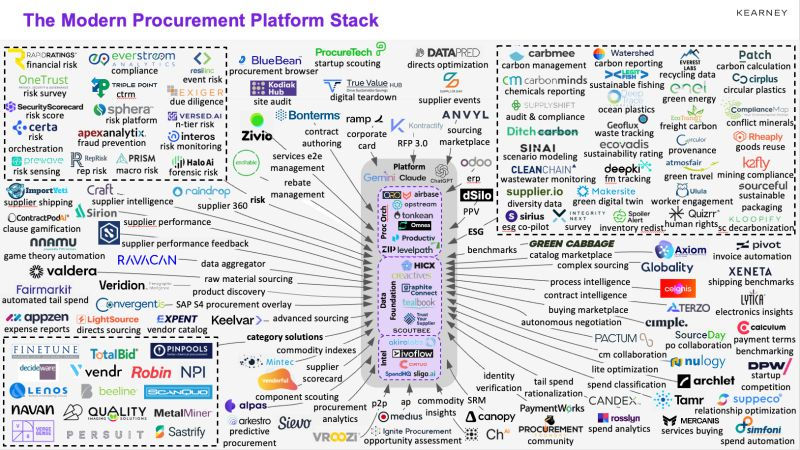
Technology in procurement is evolving at lightning speed. Every year, a fresh crop of digital procurement apps and platforms emerges, each promising to streamline processes, reduce costs, or unlock new analytical insights. The procurement technology landscape is fragmented, with an ever increasing complex array of bespoke solutions, data formats, and integration hurdles. Organizations using best-of-breed solutions to address their business needs frequently find their Procurement tech stacks fragile—patchworked together—and lacking the agility required for today’s demands
Due to this evolution, most organizations are using best-in-breed apps/solutions/platforms to address travel, expense reporting, sales information, customer relations, logistics, energy management, third-party group purchasing, tail-end organizations, etc.
Below is an detailed list of internal and external information sources within the organization that are classified into reference data, master data, and transactional data types.
Reference Data
This category includes business elements such as plants, currencies, locations, and lines of business. This data is generally incorporated into financial reporting and ERP systems. Other types of reference data external to the organization include HSN Harmonized System Codes used for trade and tariff purposes.
Master Data
This category includes entities like suppliers, products, and customers, usually listed in separate tables, Excel spreadsheets, databases, Google Sheets, etc.
Transaction Data
This category includes detailed events such as sales, purchase orders, invoices, expense reports, and payroll processing.

The challenge lies in the fact that much of the indirect procurement expenditure is managed through third-party provider platforms outside the organization. For instance, a typical project aimed at consolidating travel expense data would require collecting information from two or three different travel platforms. Similarly, logistics data is dispersed among parcel vendors, full-truck load logistics platforms, and other LTL providers. Utilities and energy management data are sourced from various utility companies across different states and locations. Sometimes, even data on direct materials and services is found outside the organization. Additionally, there are third-party ranking companies assessing financial risks, country risks, political risks, ESG risks, and more. It is reasonable to estimate that an average manufacturer with annual revenue of 1 billion dollars would have at least a dozen data sources.
The Current State:
A standard category management project requires gathering data from multiple sources to develop an effective sourcing strategy. Consequently, category manager or analyst must manually extract data from various platforms. This issue leads to wasted hours, increased costs, and a higher likelihood of errors. Additionally, storing exported data can become a costly burden. Not to mention the idle time spent waiting for data reports in weekly or monthly batches. In practice, there is typically a 3-6 week gap between real-time data and reported data.
The Digital Solution:
A proposed solution involves creating a real-time data lake that integrates cloud, application, and on-premises data through a high-performance semantic layer, ensuring immediate and governed access no matter where the data resides.
Seamlessly connect heterogeneous data —
bridging the gap between digital platforms and legacy systems for real-time insight
Centralize data governance —
providing holistic management of physical and virtual data assets with corresponding business, operational, and technical metadata
Deliver data products across disparate environments —
put the right data into the hands of the right users at the right time
Integrate data access throughout the organization using a centralized, governed layer (data lake) that links diverse data sources, facilitates rapid prototyping for testing new requirements, and speeds up the delivery of data products, all to enable self-service and quicker insights.
.
If you need further information on how to create a procurement data lake for your organization, please reach to us at info@elbazconsultancy.com.

Comments